
How to change Invisalign aligners is one of the most common questions asked by patients undergoing clear aligner orthodontic treatment. At Horley & Gatwick Dental Centre in Horley, this phase is carefully explained because changing aligners correctly is essential for achieving predictable, safe and stable orthodontic results. Clear aligner treatment is based on precision, planning and patient cooperation, and each aligner plays a specific role within a structured clinical sequence.
Understanding how aligners are changed helps patients follow the treatment correctly and avoid behaviours that may slow down progress or compromise results. Aligner changes are never random and should always follow the schedule provided by the dentist.
What Invisalign aligners are and why they are changed
Clear aligners are removable orthodontic devices designed to move teeth gradually through a sequence of controlled steps. Each aligner is manufactured to apply specific forces that guide teeth toward their planned position. Once an aligner has completed its function, it must be replaced with the next one in the sequence.
Knowing how to change Invisalign aligners means understanding that each new aligner represents a new phase of tooth movement. Teeth need time to respond biologically to orthodontic forces, which is why aligners are worn for a defined period before moving to the next set. Changing aligners too early or too late can interfere with the treatment plan.
The purpose of changing aligners is to ensure continuous, progressive movement while maintaining comfort and safety for the patient.
How the Invisalign aligner change schedule works
The aligner change schedule is established during the treatment planning phase. Each patient receives a personalized sequence based on tooth position, bone response and overall oral health. In most cases, aligners are changed after a fixed number of days, provided they have been worn consistently as prescribed.
Understanding how to change Invisalign aligners also means respecting the recommended wear time. Aligners are designed to be worn for most hours of the day, removed only for eating and oral hygiene. If aligners are not worn as instructed, tooth movement may be incomplete, making the next aligner difficult or uncomfortable to fit.
For this reason, aligner changes should always follow professional guidance and never be adjusted independently by the patient.
How to change Invisalign aligners correctly
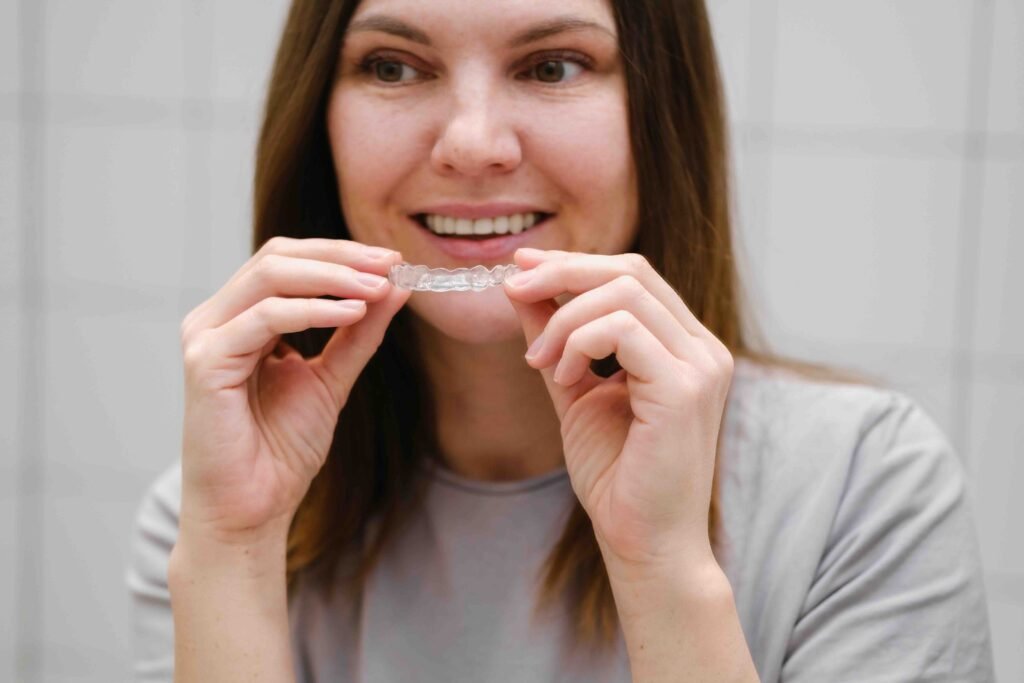
Changing aligners is a simple but important action. The previous aligner should be removed gently, and the new one inserted carefully, ensuring it fits fully over the teeth. A proper fit confirms that the teeth have moved as expected and that the treatment is progressing correctly.
When learning how to change Invisalign aligners, patients are advised to:
- Wash hands thoroughly before handling aligners
- Insert the new aligner starting from the back teeth and moving forward
- Check that the aligner is seated properly without forcing it
If an aligner does not fit correctly or causes unusual discomfort, it is important to contact the dental practice rather than attempting adjustments at home.
What to expect after changing Invisalign aligners
After changing to a new aligner, it is normal to feel mild pressure or tightness. This sensation indicates that the aligner is working as intended. The feeling usually subsides within a short time as the teeth adapt to the new forces.
Understanding how to change Invisalign aligners also involves recognising what is normal and what is not. Persistent pain, poor fit or unexpected symptoms should always be reported to the dentist. Self-management or online advice should be avoided, as improper handling may affect treatment outcomes.
Regular monitoring appointments allow the dental team to assess progress and ensure that aligner changes are producing the desired results.
How to care for aligners during the treatment
Proper aligner care supports both oral health and treatment effectiveness. Aligners should be cleaned regularly using appropriate methods recommended by the dentist. Hot water, abrasive products or household cleaners should never be used, as they can damage the aligners.
Patients who understand how to change Invisalign aligners also understand the importance of hygiene. Clean aligners reduce the risk of plaque accumulation, staining and unpleasant odours, helping maintain a healthy oral environment throughout treatment.
Consistent oral hygiene routines, including brushing and flossing, are essential when wearing clear aligners.
Why professional supervision matters during aligner changes
Clear aligner treatment should always be supervised by a qualified dental professional. Although aligners are removable, the process of changing them follows a precise clinical plan based on biological responses.
Understanding how to change Invisalign aligners includes recognising the importance of professional monitoring. Changes in tooth movement, gum health or bite alignment must be assessed and managed by the dentist to ensure safe progression.
Do-it-yourself approaches, delayed consultations or unauthorised advice may compromise both results and oral health.
Conclusion: how to change Invisalign aligners safely and effectively
How to change Invisalign aligners is a fundamental aspect of clear orthodontic treatment. Correct timing, proper handling and professional supervision are essential for achieving predictable and stable outcomes. At Horley & Gatwick Dental Centre, patients receive clear guidance and ongoing support throughout their aligner journey. Anyone considering or already undergoing clear aligner treatment can book a professional consultation to receive personalised advice and ensure their treatment progresses safely and effectively.
📞 +44 1293781200
💬 +44 7934895665
✉️ reception@horleyandgatwickdental.com
📍 33 Massetts Road, Horley RH6 7DQ, UK