
Orthodontics includes many technical terms that may feel unfamiliar to patients at first. Words such as orthodontics, fixed braces, clear aligners, malocclusion, overbite, crossbite, orthodontic retainers, and digital orthodontics describe common treatments, conditions, and tools, but they are not always easy to understand without a clear explanation.
This Complete Guide to Orthodontics has been created to explain, in simple terms, what it means to correct tooth alignment, when orthodontic treatment may be useful, and which options may be considered. At Horley & Gatwick Dental Centre in Horley, every treatment journey is planned around the patient’s individual needs, with a simple, empathetic approach focused on oral health.
What does orthodontic treatment mean?
Orthodontics is the branch of dentistry that focuses on improving tooth alignment and the relationship between the upper and lower arches. It is not only about the appearance of the smile, but also about chewing function, daily cleaning, and overall oral health.
When teeth are crooked, crowded, or do not bite together correctly, they can be harder to clean properly. This may increase the risk of plaque build-up, gum inflammation, enamel wear, or jaw discomfort. For this reason, orthodontic treatment should not be seen only as an aesthetic choice.
Common conditions include malocclusion, overbite, underbite, crossbite, and open bite. Each situation requires a professional assessment, because there is no single appliance that is suitable for everyone. The dentist evaluates the teeth, gums, bone, patient age, and treatment goals before recommending the most appropriate plan.
How do orthodontic appliances work?
Orthodontic appliances work by applying gentle, controlled forces to the teeth, gradually guiding them into a better position. This movement takes time and must be carefully monitored, as the teeth and surrounding tissues need to adapt naturally.
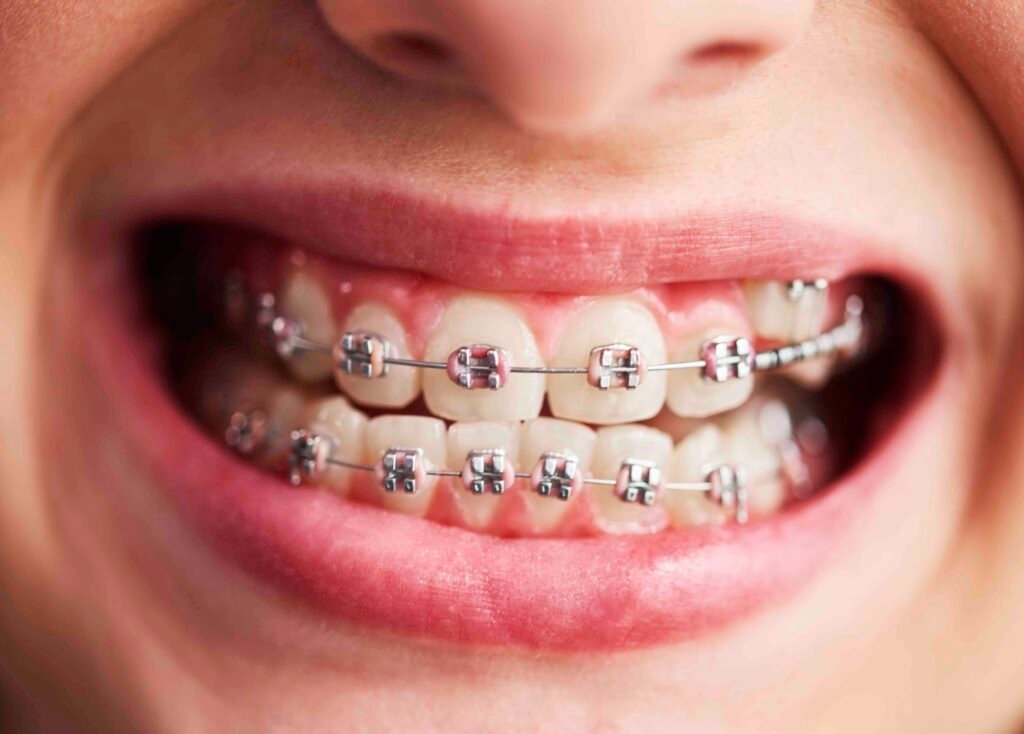
Fixed braces are made up of small attachments, called orthodontic brackets, connected by orthodontic wires. The wire applies gradual pressure, while the brackets help guide tooth movement. In some cases, elastics in orthodontics may also be used to help correct the relationship between the upper and lower arches.
There are also removable braces, which are often used in children or during early treatment phases, and clear aligners, removable transparent trays designed to move teeth gradually. Each option has specific indications, which is why do-it-yourself methods or unsupervised devices should be avoided. Moving teeth incorrectly can damage teeth, gums, and roots.
Can adults have orthodontic treatment?
Yes, orthodontic treatment can also be considered in adulthood. Many patients think braces are only for children or teenagers, but this is not the case. The term orthodontics for adults and children explains that treatment can have different goals depending on age.
In children, orthodontics may help guide growth and intercept certain problems early. In adults, treatment is often used to correct crowding, gaps, misalignment, or bite problems that are already present. Before starting, however, it is essential to assess the health of the gums and supporting bone.
An adult with healthy gums can often undergo orthodontic treatment, but if there is gum disease, gum recession, or tooth mobility, extra care is needed. At Horley & Gatwick Dental Centre in Horley, the treatment pathway is assessed comprehensively, considering not only tooth alignment but also the stability of the tissues that support the teeth.
What are clear aligners?
Clear aligners are removable transparent trays made to measure for each patient. They are designed to gradually move teeth into a better position. Many adult patients appreciate them because they are discreet and can be removed for eating and brushing.
However, this does not mean they are suitable for every case. Aligners may be effective for many situations, such as mild crowding, gaps between teeth, or certain bite problems, but they must be planned accurately. The patient must wear them for the number of hours recommended by the dentist and follow instructions carefully.
Digital orthodontics helps plan tooth movement using scans and dedicated software. This makes it easier to visualise the expected treatment path, but it does not replace a clinical assessment. Even with clear aligners, regular check-ups and patient cooperation are essential for achieving a stable result.
Why should you not straighten your teeth by yourself?
Many online searches focus on ways to straighten teeth at home or without braces. It is important to clarify that do-it-yourself methods are not recommended. Moving teeth means acting on bone, periodontal ligaments, gums, and roots. Doing this without a diagnosis can cause serious damage.
Improvised elastics, unsupervised trays, or home attempts to close gaps between teeth may cause gum recession, tooth mobility, bone loss, or worsening of the bite. Even a small movement, if not planned correctly, can create functional problems.
An orthodontic treatment plan is designed to avoid these risks. During the assessment, photographs, scans, X-rays, and the relationship between the arches may be evaluated. Only after this analysis is it possible to understand which solution is most suitable. The goal is not only to have straighter teeth, but to achieve a healthy, stable smile in harmony with the mouth.
How is the result maintained after orthodontic treatment?
Once treatment is complete, the journey is not over. Teeth naturally tend to move over time, which is why orthodontic retainers are used to help maintain the result achieved.
Retainers can be fixed or removable. Fixed retainers are placed behind the front teeth, while removable retainers are trays or appliances worn according to the instructions provided. The retention phase is just as important as active treatment, because it protects the work completed over time.
Orthodontic check-ups also continue to play an important role. During these visits, the dentist checks that the teeth remain stable, that the retainer is intact, and that oral hygiene is being maintained correctly. Skipping this phase may lead to relapse, meaning the teeth may partially move back towards their original position.
How long does orthodontic treatment take and what does it depend on?
The length of orthodontic treatment varies from patient to patient. It depends on the type of problem, age, biological response of the tissues, patient cooperation, and the appliance chosen. Some simpler cases may take less time, while more complex situations may require a longer treatment pathway.
The cost also cannot be defined generically, because it depends on many factors: the type of appliance, the complexity of the case, treatment duration, required check-ups, and clinical goals. For this reason, it is important to receive a personalised assessment rather than relying only on general information found online.
At Horley & Gatwick Dental Centre in Horley, patients are supported with clear explanations, so they can understand each stage of their treatment. Clear information is essential for approaching orthodontics with greater confidence and awareness.
Complete Guide to Orthodontics: why a professional assessment matters
This Complete Guide to Orthodontics is designed to help patients better understand terms such as aesthetic orthodontics, lingual orthodontics, interceptive orthodontics, clear aligners, fixed braces, and orthodontic retainers. Understanding these words can help you feel more informed, but it does not replace a clinical diagnosis.
Every mouth is different, and every treatment should be planned individually. Correct alignment is not only about straighter teeth, but also about chewing, oral hygiene, stability, and long-term health. At Horley & Gatwick Dental Centre in Horley, orthodontics is approached with care, listening, and technology that supports treatment planning. Discussing your individual case with a dentist is the safest way to understand which pathway may be suitable for you.
📞 +44 1293781200
💬 +44 7934895665
✉️ reception@horleyandgatwickdental.com
📍 33 Massetts Road, Horley RH6 7DQ, UK